Written by the PromoteLabs team. Updated November 2026.
To start a digital product business, pick a problem people already pay to solve, validate demand before you build, choose a format that delivers the result fastest, price on value, build a simple funnel and keep selling after launch.
Here is a pattern that repeats constantly. Someone spends four months building a 40-lesson course, launches it and sells three copies. Someone else spends a weekend writing a one-page description of a simple template pack, asks their audience if they want it, gets 60 people on a waitlist and builds it in a week. The difference is not talent. It is that the second person tested demand before building. That is the first lesson of a digital product business, and there are a few more like it.
What Counts as a Digital Product?
A digital product is anything you create once and deliver online, again and again, without shipping or inventory. Popular examples include ebooks and reports, online courses and video training, templates and checklists, software and AI tools, memberships, audio programs, printables and done-for-you content packs. Because each extra sale costs almost nothing to deliver, digital products can be one of the highest-margin business models available to a solo entrepreneur.
That does not mean they are easy. Most first digital products sell few copies, not because the idea was bad, but because the creator skipped validation, priced poorly or launched to nobody. The steps below help you avoid those mistakes.
How to Start a Digital Product Business, Step by Step
1. Start with a problem people already pay to solve
The best product ideas come from questions your audience keeps asking, problems you have solved for yourself or others, and topics where people are already buying books, courses and tools. Look at what sells in marketplaces, read reviews of competing products and note what buyers complain is missing.
2. Validate before you build
Before investing weeks of work, test demand. Describe the product on a simple page and see if people sign up for a waitlist, run a small pre-sale, ask your email list or social followers which of three ideas they want most, or offer a live workshop on the topic. If nobody bites, adjust the idea before you build it.
3. Choose the right format
| Format | Good for | Typical effort |
|---|---|---|
| Ebook or report | Explaining a method | Low to medium |
| Templates and checklists | Saving buyers time | Low |
| Video course | Teaching a skill step by step | Medium to high |
| Membership | Ongoing content and community | Ongoing |
| Software or AI tool | Automating a task | Medium to high |
4. Create it efficiently
Outline the transformation first: where the buyer starts, where they want to end up and the steps in between. Keep the product as short as it can be while still delivering the result. AI tools can speed up research, outlining and first drafts. Private label and White Label rights products can save you even more time, giving you a finished base you can edit, brand and improve.
5. Price it with confidence
Price based on the value of the result, not the number of pages or videos. Many creators start with a low-cost entry product, then add a higher-priced premium version or service. Bundles and bonuses often increase perceived value more than discounts do.
6. Build a simple sales funnel
You need a sales page that speaks to the buyer’s problem, a checkout, a delivery area and a few follow-up emails. A short video sales letter can lift conversions, especially for courses and coaching-style products. Add a lead magnet in front of the funnel so people who are not ready to buy can still join your list.
7. Launch, then keep selling
Launch to your email list first, then promote through content, partners and affiliates. After launch, keep the product visible with an evergreen funnel, seasonal promotions and new bonuses. Many successful creators earn more from a product in years two and three than at launch.
Five Digital Product Mistakes to Avoid
- Building for months without feedback. Validate early and ship a first version.
- Making it too long. Buyers want results, not volume.
- Launching without a list. Start building an audience before your product is ready.
- Competing only on price. Compete on a clearer promise, better bonuses and better support.
- Creating one product and stopping. A small product line, from entry offer to premium, usually earns far more than a single product.
Why Learning From a Complete Program Helps
Each of these steps has its own learning curve, and it is easy to get stuck on one of them for months. A structured program that walks you through the whole process, from idea to launch, saves time and helps you avoid expensive mistakes. If you can also resell that program under your own brand, it becomes a digital product in its own right.
Digital Product Ideas by Niche
| Niche | Entry product | Premium product |
|---|---|---|
| Fitness and wellness | A 30-day plan or meal planner | A video coaching program or membership |
| Small business | Templates for proposals, contracts or social posts | A step-by-step course on getting clients |
| Online marketing | A checklist or swipe file | A full training program with AI tools |
| Personal finance | A budget spreadsheet or workbook | A course on saving, debt or investing basics |
| Hobbies and crafts | Patterns, guides or printables | A video masterclass |
Your First 60 Days
- Week 1 to 2: list 10 product ideas, pick the top three and test interest with your audience.
- Week 3 to 4: outline your chosen product, set up a waitlist page and start a simple lead magnet.
- Week 5 to 6: create the first version, write the sales page and set up checkout and delivery.
- Week 7 to 8: launch to your list, collect feedback, add a bonus and plan your next product.
The fastest path through this plan is to start from something already built. A complete program with rights lets you skip straight to branding, pricing and launching, and spend your time on marketing instead of production.
Run This Playbook With AI
AI can take you from idea to first draft of a digital product in a weekend. Use these prompts to do the heavy lifting.
Prompt 1: Validate the idea
I want to create a digital product for [audience] about [topic]. List the 10 most common questions and frustrations this audience has, then suggest 3 product formats (course, template pack, coaching program, workbook) that would solve the biggest one.
Prompt 2: Outline the product
Create a complete outline for a [format] called [working title] for [audience]. Break it into modules, list the lessons in each, and give one action step per lesson so buyers get a result, not just information.
Prompt 3: Turn it into a coaching offer
Turn this product outline into a 6-week group coaching program: [paste outline]. Give a weekly theme, a live call agenda, a homework task and a simple way to measure progress.
Prompt 4: Write the sales page skeleton
Write a sales page outline for [product] aimed at [audience]: headline, the problem, the promise, what is inside, who it is for, proof, price, guarantee and FAQ. Use plain language and no hype.
Fill in the parts in brackets, then edit what the AI gives you so it sounds like you. AI does the first draft; your experience makes it worth reading.
Want a Complete Program? Get Digital Product Power Free
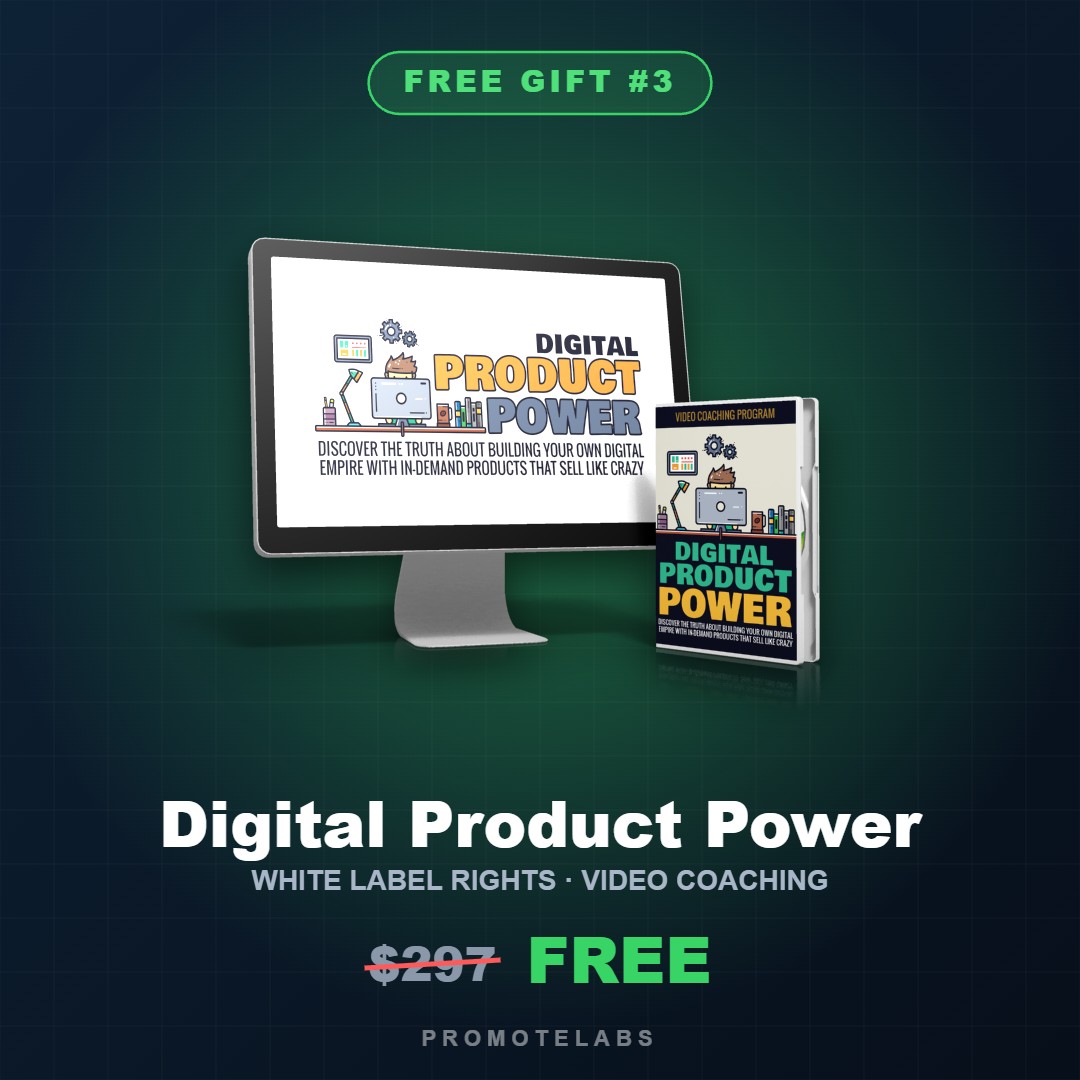
If you would like to be walked through every step above on video, Digital Product Power is a 10-video program on building a digital product business. It comes with White Label rights, so once you have learned from it, you can also brand it and sell it as your own digital product.
The 10 training videos
| Video | What it covers |
|---|---|
| 1. The Best Business In The World | Why selling digital products is so attractive |
| 2. Finding Your Hungry Market | Choosing a niche and seeing what its members already buy |
| 3. DIY Products: Yay or No Way? | Deciding whether to create products yourself or outsource |
| 4. Putting It in the Hands of a Pro | A three-step process to find, vet and hire freelancers |
| 5. Quick and Dirty Way to Get Products | Using resell and private label rights, and spotting quality |
| 6. Blow Their Socks Off Ebooks and Reports | Creating content that brings buyers back |
| 7. Secrets of Creating Stellar Videos | Video formats, presentation and basic equipment |
| 8. You, The Next Bill Gates? | Building software or apps without coding |
| 9. Secrets of Amazing Live Events | Selling webinar seats and recordings |
| 10. Video Killed the Sales Letter Star? | Creating a multi-part online course |
Each video runs about five minutes, which makes the program easy to finish and easy to sell as a quick-start course.
Everything included
- 10 unbranded training videos in MP4.
- Course transcripts in DOCX.
- A professionally scripted video sales letter in MP4, with no course name mentioned, plus its transcript.
- Editable cover graphics in PNG, JPG and PSD.
- A marketing kit with three promotional emails and one long blog post, ready to copy and paste.
What the license allows
| You can | You cannot |
|---|---|
| Use the program yourself and sell it at your price | Pass resell or private label rights to your customers |
| Edit, rebrand, rename and redesign it | Use the content or sales copy in another private label product |
| Add it to a paid membership | Give it away unchanged. Substantial editing and rebranding is required first |
| Translate it, add voiceovers or turn it into an ebook or coaching | Claim copyright without substantial changes (at least 50%) |
How to claim it free
- Visit the PromoteLabs free gifts page.
- Find Digital Product Power and copy the coupon on its card.
- Apply the coupon at checkout to bring the price to $0.
Honest notes
- The videos are short and focused, which suits beginners. More advanced buyers may want to pair it with deeper training.
- White Label rights let you sell it, but sales still depend on your marketing.
Want more finished products to sell?
If you like the idea of selling finished products under your own brand, see our licensing options for White Label and reseller rights to AI software tools and more.
Keep reading
Frequently Asked Questions
How do I start a digital product business?
Pick a problem people already pay to solve, validate demand before you build, choose the format that delivers the result fastest, price on value, set up a simple sales funnel and keep selling after launch.
What digital products sell best?
Products that solve a specific, urgent problem quickly tend to sell best. Templates, short courses, AI tools and done-for-you resources are popular because buyers get a result fast.
How do I validate a digital product idea?
Describe it on a simple page and see who joins a waitlist, run a small pre-sale, ask your audience to choose between three ideas or run a live workshop on the topic before building the full product.
How should I price my first digital product?
Price on the value of the result rather than the number of pages or videos. Many creators start with a lower-priced entry product and add a premium version or service later.
Can I use PLR or White Label products to start faster?
Yes. Rights products give you a finished base you can edit, brand and improve, so you can spend more time on marketing. Always follow the license that comes with them.
Where can I get Digital Product Power free?
Digital Product Power is one of the free gifts on the PromoteLabs free gifts page.