DOWNLOAD & SAVE THIS POST >> CLICK HERE <<
Written by the PromoteLabs team. Updated November 2026.
To build a brand that stands out, define exactly who you serve, write a one-sentence brand promise, choose a clear point of difference and personality, use a simple visual identity consistently and deliver the same experience at every touchpoint.
Close your eyes and picture a business you love buying from. You can probably describe what they stand for, how they talk and how they make you feel, without even thinking about their logo. That feeling is their brand, and it was built on purpose. Small businesses can build the same thing, often faster than big ones, because they are closer to their customers. Here is how.
What a Brand Really Is
A brand is not your logo. It is what people think and feel when they hear your name, and what they expect when they buy from you. Your logo, colors and website are part of how you express it, but the brand itself is built from your promise, your personality and the experience you deliver every time.
For small businesses and solo entrepreneurs, a strong brand does a lot of heavy lifting. It makes you memorable in a crowded market, helps people trust you before they buy, lets you charge more than a generic competitor and makes word of mouth easier because people can describe what you stand for. In a world where AI assistants summarize businesses in a sentence or two, being clear about who you are matters more than ever.
How to Build a Brand That Stands Out, Step by Step
1. Define who you serve
The clearest brands are built for a specific audience. Describe your ideal customer, what they want, what frustrates them and what they value. Trying to appeal to everyone usually means standing out to no one.
2. Write your brand promise
Your promise is the result or experience customers can count on. Write it in one sentence: “We help [audience] get [result] without [frustration].” Every part of your marketing should support it.
3. Find your point of difference
List what you do differently from competitors. It might be your method, your speed, your specialization, your values, your guarantee or your personality. Choose one or two differences that matter to your customers and lead with them.
4. Choose your personality and voice
Are you friendly and casual, expert and precise, bold and playful? Pick three words that describe how your brand should sound, and use them to guide your writing, videos and social posts. A consistent voice makes you recognizable even without your logo.
5. Create a simple visual identity
You need a logo, two or three brand colors, one or two fonts and a style for images. Keep it simple and use it everywhere. Consistency builds recognition faster than clever design.
6. Tell your story
People connect with stories more than features. Share why you started, the problem you saw and what you believe. A good brand story is short, honest and focused on the customer as much as on you.
7. Deliver the experience, every time
Your brand is ultimately judged by what happens after someone buys. Fast replies, clear onboarding, products that deliver and small touches that exceed expectations all build a reputation that marketing alone cannot.
Where Your Brand Shows Up
| Touchpoint | What to check |
|---|---|
| Website | Does the homepage state who you serve and your promise in the first few seconds? |
| Social profiles | Are your name, image, description and voice consistent? |
| Do your emails sound like your brand and look consistent? | |
| Products | Do covers, member areas and deliverables match your visual identity? |
| Customer service | Do replies reflect your values and tone? |
| Listings and reviews | Is your information accurate everywhere, and do you respond to reviews? |
Common Branding Mistakes
- Starting with the logo before defining the audience and promise.
- Copying a competitor’s look and message.
- Changing colors, voice or positioning every few months.
- Making claims you cannot back up.
- Treating branding as a one-time project instead of something you live every day.
A One-Week Brand Sprint
- Day 1: describe your ideal customer and their biggest frustrations.
- Day 2: write your brand promise and point of difference.
- Day 3: choose three personality words and write a short brand story.
- Day 4: pick your colors, fonts and logo direction.
- Day 5: update your website homepage and social profiles.
- Day 6: review your emails, products and customer service replies for consistency.
- Day 7: write a one-page brand guide so you, your team or any freelancer can stay consistent.
Because every business needs a brand, and most small business owners know theirs could be stronger, branding is one of the easiest topics to sell as a book, audiobook or training.
Personal Brand or Business Brand?
Solo entrepreneurs often wonder whether to build a brand around themselves or around a business name. Both can work. A personal brand builds trust quickly because people connect with a real person, which suits coaches, consultants, speakers and creators. A business brand is easier to grow beyond one person, hand to a team or eventually sell, which suits product, software and agency businesses. Many businesses blend the two: a business brand with a visible founder or team who share expertise and stories.
| Personal brand | Business brand | |
|---|---|---|
| Builds trust | Fast, through personality | Over time, through consistency |
| Scales with a team | Harder | Easier |
| Can be sold | Rarely | Yes |
| Best for | Coaches, consultants, creators | Products, software, agencies |
Using AI to Sharpen Your Brand
AI assistants can speed up much of the brand thinking above. Ask one to interview you about your customers and what makes you different, then draft three versions of your brand promise. Paste in your homepage and ask whether the message is clear to a first-time visitor. Have it rewrite a few paragraphs in your chosen brand voice so you can hear how it sounds. Keep the final decisions yours, and check that every claim the AI suggests is something you can actually back up.
How to Tell If Your Brand Is Working
- People can describe what you do in one sentence after visiting your site.
- More customers find you by name or through referrals.
- Prospects push back less on price.
- Reviews and messages mention the same strengths you want to be known for.
- AI assistants and directories describe your business accurately.
If those signals are missing, go back to your audience, promise and point of difference. Most brand problems start there, not with the logo.
Run This Playbook With AI
AI can help you define and express your brand in a fraction of the time. Use these prompts to build a brand people remember.
Prompt 1: Define your brand in one page
Help me write a one-page brand guide for [business]. Ask me 10 questions first about my audience, values and personality, then turn my answers into a mission statement, three brand values and a description of my brand voice.
Prompt 2: Write your positioning
Write 5 positioning statements for [business] that complete this sentence: For [audience] who [problem], we are the [category] that [unique benefit] because [proof]. Make each one specific, not generic.
Prompt 3: Find your story
Here are a few facts about how I started: [notes]. Turn them into a 200-word origin story for my About page that shows why I care about helping [audience].
Prompt 4: Keep your voice consistent
Here is a sample of my writing: [paste]. Describe my voice in 5 rules, then rewrite this new piece of copy so it follows those rules: [paste copy].
Fill in the parts in brackets, then edit what the AI gives you so it sounds like you. AI does the first draft; your experience makes it worth reading.
Want to Go Deeper? Get the BRAND Book and Audiobook Free
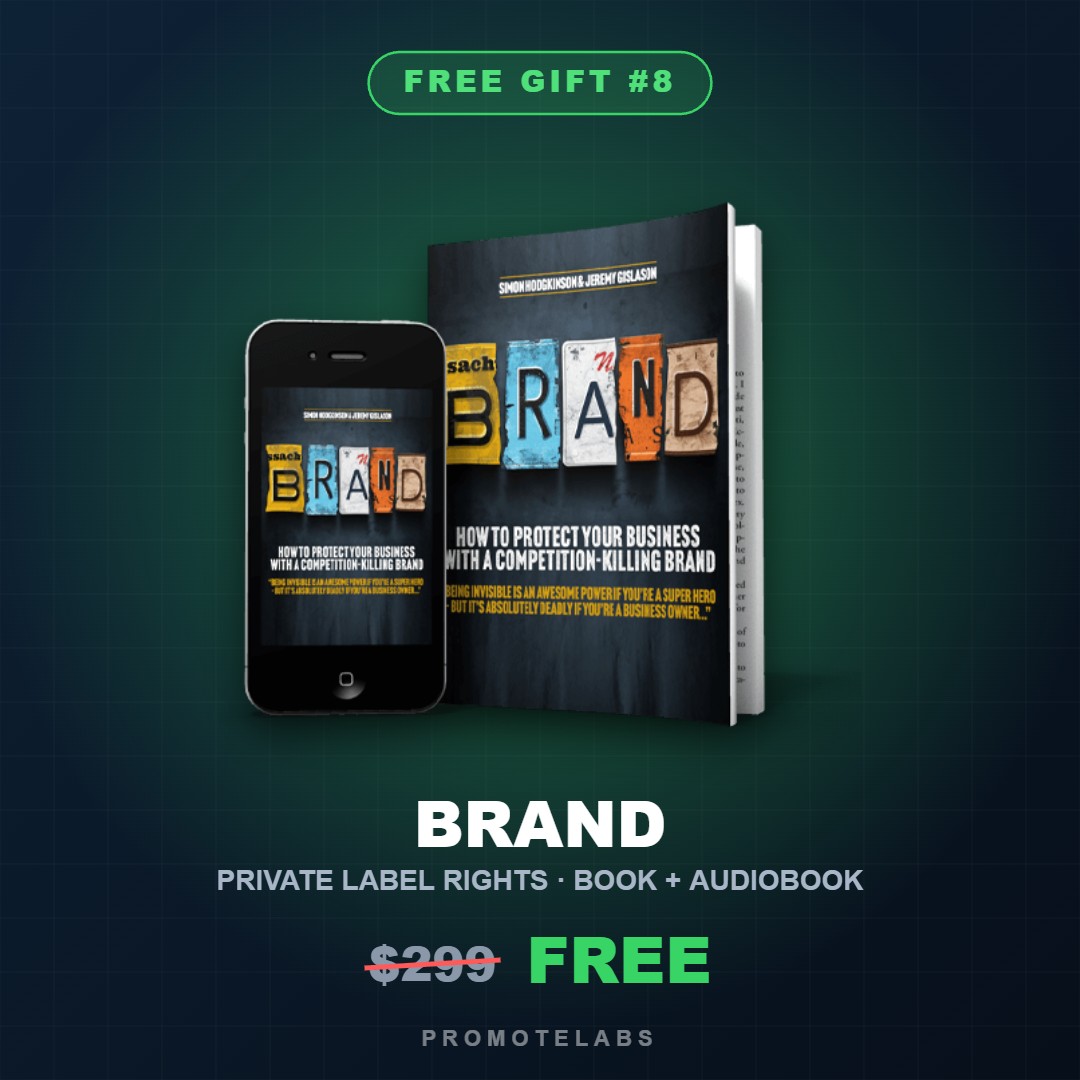
If you would like a complete guide to building a standout brand, BRAND is a book and audiobook that covers the topic in depth. It comes with private label rights, so you can read or listen to it yourself, give it away to grow your list or rebrand it and sell it as your own.
What the book covers
- Branding lessons from successful businesses.
- Common branding mistakes that hurt long-term growth.
- The 5 Ps of branding.
- Three approaches to naming a product.
- Pricing mistakes that weaken a brand.
- How to make a strong first impression.
- A five-step process for building a branding strategy.
- Building top-of-mind awareness.
- Testing branding concepts with your audience.
- 11 product positioning approaches and over two dozen real-world brand examples.
- Designing a logo that builds trust and bringing the brand into every part of the business.
What is in the PLR package
| Asset | Format |
|---|---|
| The BRAND book | Editable DOCX |
| Audiobook | MP3, with full PLR rights |
| Cover graphic | Editable |
| Sales letter | DOCX |
| Mockup graphics | PSD and PNG |
What the license allows
| You can | You cannot |
|---|---|
| Sell the book as-is, or edit and rebrand it | Pass PLR, resale or giveaway rights to customers, subscribers, affiliates or partners |
| Convert it into videos, a membership, a lead magnet, blog posts, a webinar or a coaching program | Let buyers of your offers resell the content |
How to claim it free
- Go to the PromoteLabs free gifts page.
- Find BRAND and copy the coupon on its card.
- Apply the coupon at checkout to bring the price to $0.
Honest notes
- Edit the examples and add your own stories to make it feel like yours.
- PLR purchases are not refunded, except for duplicates.
Keep reading
Frequently Asked Questions
How do I build a brand for my business?
Define exactly who you serve, write a one-sentence brand promise, choose a clear point of difference and personality, create a simple visual identity, tell your story and deliver the same experience at every touchpoint.
Is a brand the same as a logo?
No. A logo is one way to express your brand. The brand itself is what people think, feel and expect when they hear your name.
Should I build a personal brand or a business brand?
A personal brand builds trust quickly and suits coaches, consultants and creators. A business brand is easier to scale with a team or sell. Many businesses combine the two.
How long does it take to build a brand?
You can define the foundations in about a week, but reputation builds over months and years of consistent messaging and delivery.
How do I know if my brand is working?
People can describe what you do in one sentence, more customers find you by name or referral, price objections drop and reviews mention the strengths you want to be known for.
Where can I get a free branding book?
BRAND is a free PLR book and audiobook and one of the free gifts on the PromoteLabs free gifts page.
DOWNLOAD & SAVE THIS POST >> CLICK HERE <<